Crafting Preflop Charts for Multi-Table Poker Tournaments: Adjusting Ranges Based on Stack Depths and Position Dynamics
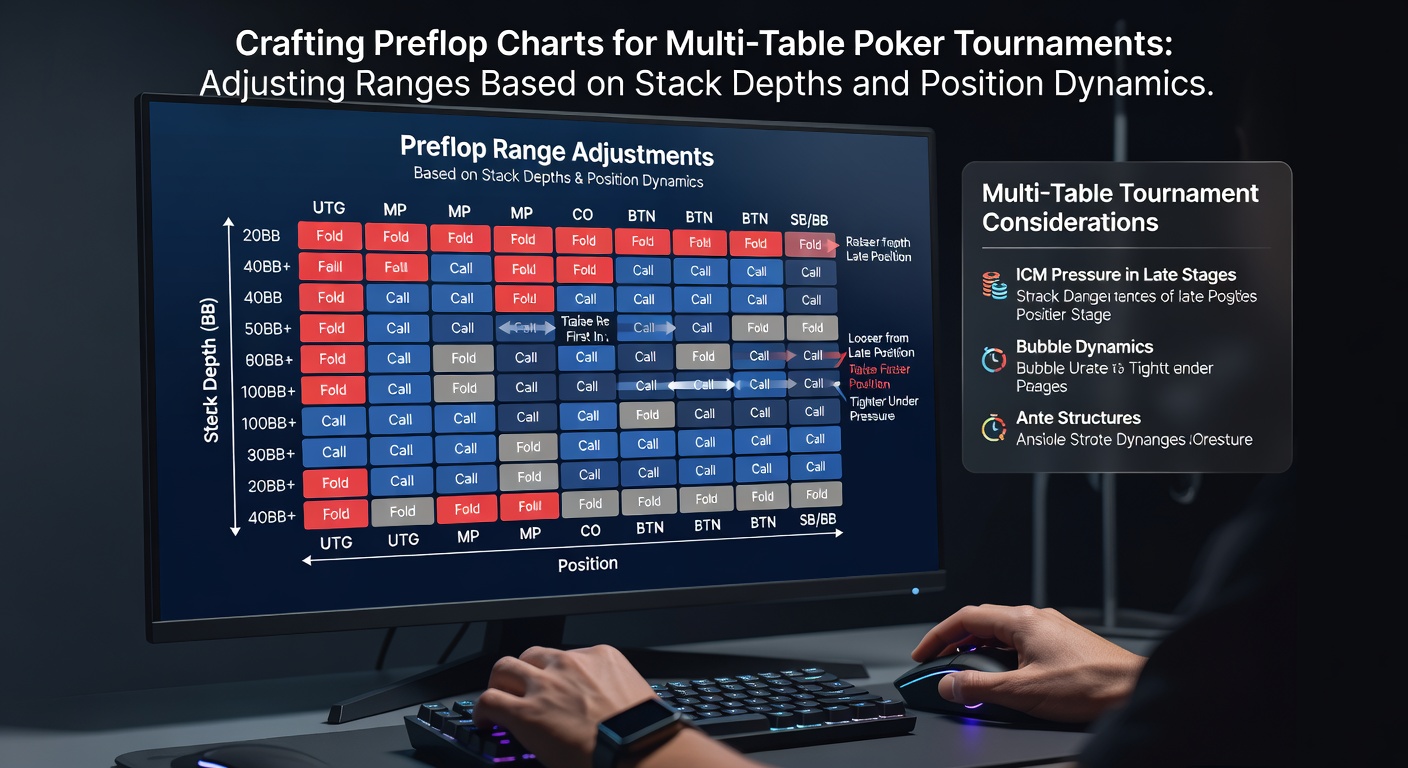
Multi-table poker tournaments require players to build preflop charts that account for changing variables throughout each event, and researchers in gaming strategy have documented how stack depths along with positional factors shape opening ranges across thousands of recorded hands. Data from major events shows that effective stack sizes below 20 big blinds force tighter ranges while deeper stacks above 40 big blinds allow wider selections in later positions, and tournament directors track these adjustments through software logs that capture millions of decisions each year.
Observers note that position serves as the primary filter when constructing these charts because early positions demand stronger holdings to withstand raises from behind whereas late positions permit speculative calls based on fold equity and pot odds. Studies from academic institutions have quantified this effect by analyzing hand histories from European tournaments where button raises occurred 18 percent more frequently than under-the-gun opens at identical stack depths.
Core Principles of Preflop Chart Construction
Chart builders begin with baseline ranges derived from equilibrium solutions then layer modifiers for stack size and position because raw equity calculations alone fail to capture the dynamic pressure of accumulating antes and blinds. Tournament data collected through 2025 indicates that average opening ranges tighten by approximately 12 percent when effective stacks drop below 15 big blinds yet expand again once players reach the final two tables where pay jumps reward survival over aggression.
Those who study large datasets find that suited connectors gain value in late position with 30-plus big blind stacks whereas dominated hands lose profitability when stacks fall into the 12-to-20 big blind zone where all-in decisions become frequent. Charts therefore split into categories such as push-fold, raise-call, and raise-fold to match the most probable outcomes at each depth.
Stack Depth Adjustments in Practice
Short stacks between 10 and 20 big blinds shift strategy toward binary decisions where players either commit or fold rather than calling raises with marginal holdings, and software simulations confirm that hands like ace-jack suited retain positive expected value only when stacks allow postflop maneuverability. Mid-stack ranges from 20 to 35 big blinds permit three-bet bluffs and small-ball play because implied odds remain sufficient to justify continuation after the flop.
Deep stacks above 50 big blinds introduce additional complexity since players can realize equity across multiple streets and position amplifies this advantage through repeated betting opportunities. Records from North American events reveal that average stack sizes at the start of day two often hover near 35 big blinds which prompts chart creators to include more suited broadway combinations in cutoff and button spots.
Position Dynamics and Range Construction
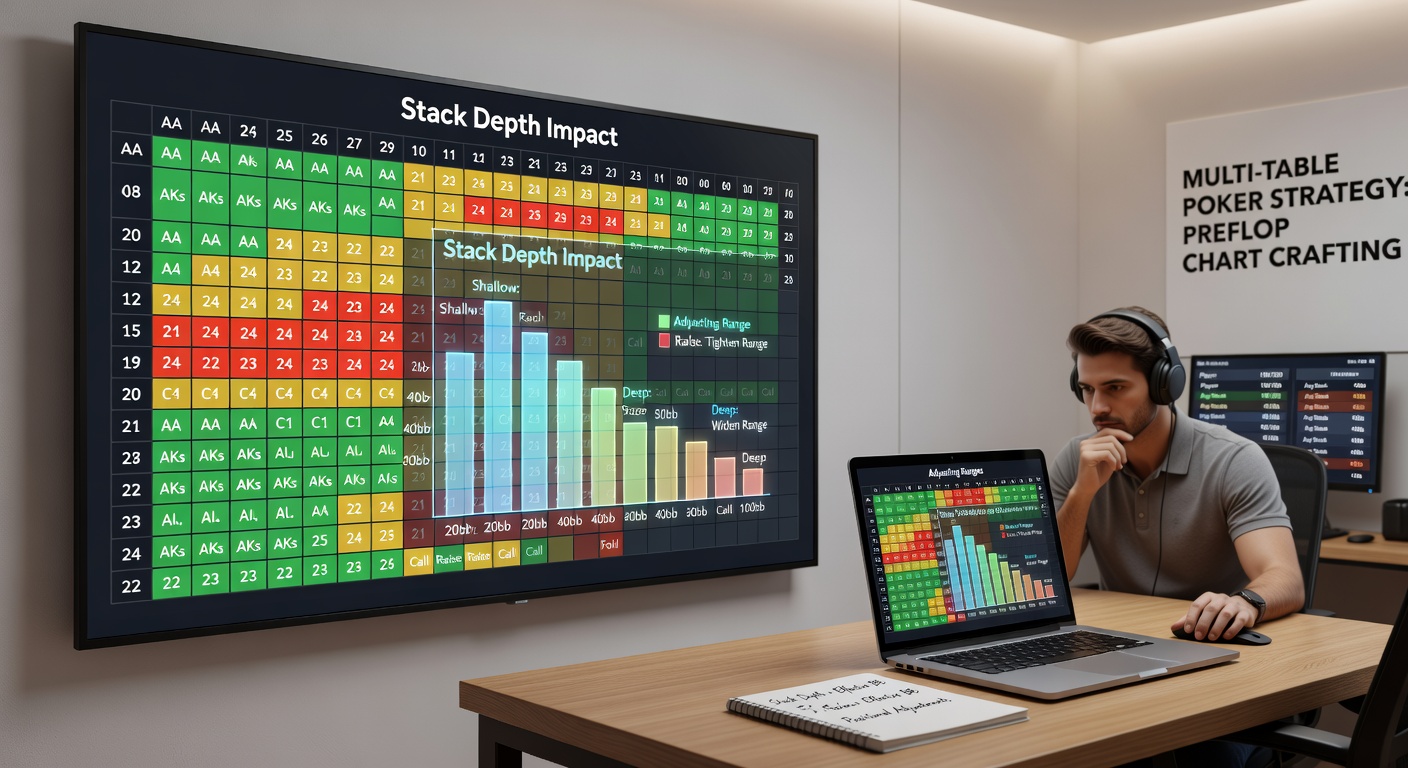
Position dictates the width of profitable ranges because later seats observe actions from earlier players and therefore extract more value from medium-strength holdings. Charts list separate columns for each seat and further subdivide by stack depth so that a player on the button with 25 big blinds opens roughly 28 percent of hands while the same stack in early position opens closer to 15 percent according to aggregated tournament reports.
Blind versus blind confrontations follow distinct rules because the small blind can defend wider against the big blind raise when stacks permit postflop play yet must tighten dramatically when facing all-in shoves. Data compiled by regional gaming authorities shows that blind defense frequencies increase by 9 percent during the later stages of events when average stacks exceed 30 big blinds.
Integrating Tournament Stage and Pay Structure
Preflop ranges evolve as tournaments progress through different payout thresholds and players near the money bubble or final table because survival incentives alter the risk-reward calculation for marginal hands. Charts therefore incorporate stage-specific overlays that reduce opening frequencies by up to 7 percent when 10 percent of the field remains and pay jumps become significant.
What's interesting is how ICM pressure modifies these adjustments because chip value changes nonlinearly near pay jumps and software models demonstrate that certain hands retain value only when the player holds a large stack relative to the table average. Observers tracking events scheduled through May 2026 note continued refinement of these models as larger fields generate more granular data for range calibration.
Tools and Implementation Methods
Modern players rely on dedicated software packages that generate dynamic charts based on user-defined parameters for stack depth and position while cross-referencing historical data from similar tournament structures. These programs output color-coded grids that players can print or load onto mobile devices for quick reference during breaks and the outputs update automatically when tournament parameters such as blind levels or payout structures shift.
Training regimens often include drills where participants practice recalling ranges under timed conditions that simulate live tournament pressure and performance metrics indicate measurable improvement in decision speed after repeated exposure to these exercises. Industry groups focused on responsible play encourage such preparation because informed decision-making reduces the likelihood of costly errors at critical moments.
Conclusion
Effective preflop charts for multi-table tournaments emerge from systematic integration of stack depth data and positional information that together produce ranges calibrated to specific game states. Ongoing collection of hand histories continues to refine these models as new events supply additional data points for analysis and adjustment. Players who maintain updated charts aligned with current tournament conditions demonstrate consistent improvements in long-term results according to aggregated performance records from multiple jurisdictions.